
Enterprise trust isn’t given. It’s built
Somnio builds products that hold up under security review. Secure architecture, identity and data protection, and compliance readiness for SOC 2, HIPAA and GDPR, designed in from the first sprint.

Security shows up as a deadline, usually someone else’s
A large customer sends a security questionnaire. An investor asks about SOC 2. A hospital procurement team wants to know where patient data lives. Suddenly a product that works has to prove things nobody designed it to prove.
Retrofitting is what makes this expensive. Access control added after the data model is set. Encryption bolted onto a schema that was not built for it. Audit logs invented in the week before a review.
Compliance is an architecture decision that gets made either early or twice.
Four ways in
Certification itself is issued by an auditor. We build the product and the evidence that gets you through the audit.
Security assessment
We review the application, the architecture, and the data flows, then give you a ranked list of findings with the fixes and the effort behind each one, written so you can hand it to the reviewer.
Compliance readiness
Building to the controls that SOC 2, HIPAA or GDPR require: access control, encryption, audit logging, data handling and retention. You get the technical work and the evidence an auditor asks for.
Secure by design development
Threat modeling, secure architecture, identity and access implementation, and data protection built into the product as it is built.
Vulnerability management and response
Vulnerability assessment and remediation, monitoring, and incident response support.
Facing a security review?
Send us the questionnaire and we’ll tell you what it takes to pass it.
Book a security reviewAssess, fix, then keep it fixed
Assess
Application, architecture, and data flow review against the framework that applies to you. Findings ranked by severity, each with the fix and the effort behind it.
Remediate
Identity and access implementation, encryption in transit and at rest, data protection, audit logging, and secure development practices in the team’s workflow.
Evidence
The documentation an auditor or a customer’s security team asks for: architecture diagrams, data flow maps, policies applied in the code, and access records.
Monitor
Vulnerability management, monitoring and alerting, and incident response support.
What you end up holding
The third item matters as much as the first two. A security engagement that reports only what was fixed is not a security engagement.
A product built to the controls
Access control, encryption, data handling and audit logging implemented in the codebase.
The evidence
Architecture diagrams, data flow documentation and records, prepared for the review you are facing.
A ranked list of what remains
Everything we did not do, with the reason and the risk, so nothing is a surprise later.
Security engineers inside the product team
Security work fails when it arrives as an audit from outside the team. A finding lands, the product team does not have context for it, and the fix either does not happen or breaks something else. Our security engineers work inside the delivery team, so the fix and the feature are built by people in the same standup.
We build in regulated environments as normal practice. Financial products with KYC and fraud requirements, healthcare products handling patient data under HIPAA and HL7, and enterprise platforms under SOC 2 and GDPR expectations.
Security Engineer
Assessment, threat modeling, identity and access, and remediation.
Tech Lead
Architecture decisions and sequencing remediation against delivery.
Cloud & Infrastructure Engineer
DevOps, monitoring, secrets management, pipeline security and infrastructure hardening.

Success cases
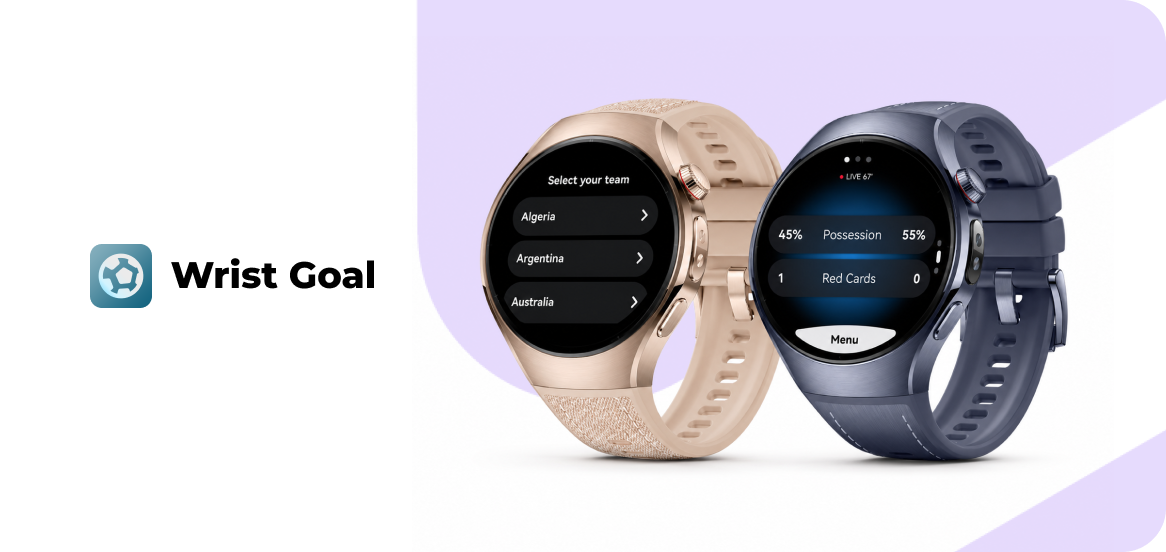
Wrist Goal is a smartwatch app delivering live football scores and match events to Huawei wearables, built by Somnio and launched natively on HarmonyOS NEXT with a template-based architecture ready to scale to future tournaments.
.png)
We partnered with the Canadian Automobile Association (CAA) to elevate member services through technology, delivering a seamless experience across Ontario.
What our clients say
“Their approach started with a Product Discovery phase, including user research, UI/UX design improvements, and technical assessments to ensure scalability. Their proactive work made a real difference in the project's success”

“Somnio Software has delivered an MVP that meets the changing needs of AI users. They've communicated effectively, have been highly responsive, and their project management is excellent. Their developers have become thought partners.”

Start with one conversation
Tell us which review you are facing and what the product handles today. We will tell you what has to change, what can wait, and what evidence you will need.



Ready to Start Your Journey?

I would love to talk to you about your project or needs.
Fill in the form or send us an email to hello@somniosoftware.com
Got an idea? We’ve got the skills.
Fill out our contact form and we’ll get in touch!
Schedule a call
Feel free to select a time at your convenience!
Questions worth asking
Still have some doubts?
No worries, here are some frequently asked questions that may help you.
Building the product and documentation so they satisfy the controls a framework requires, and so an auditor or a customer’s security team can verify them. The auditor issues the certification. Our work is making the product and the evidence ready.
We build to the technical safeguards HIPAA requires: access control, encryption, audit logging, data handling and retention. Compliance also depends on your policies, your training, and your operational practices, so we make the product side ready, and you own the rest.
SOC 2, HIPAA, GDPR, HL7 and FHIR, PCI DSS where relevant.
Before the data model is set. Access control and encryption are cheap to design and expensive to retrofit, because retrofitting them means changing the schema and everything that reads from it.
Yes, and it is a common starting point. Send us the findings. Most reports contain a small number of structural issues and a long tail of items that are quick once the structural ones are addressed.
Wherever your compliance posture requires. Deployment inside your own cloud account or region is normal for regulated products, and it is decided during architecture.
Yes, and it is the better arrangement. They own policy and posture. We own the product implementation and the evidence.