
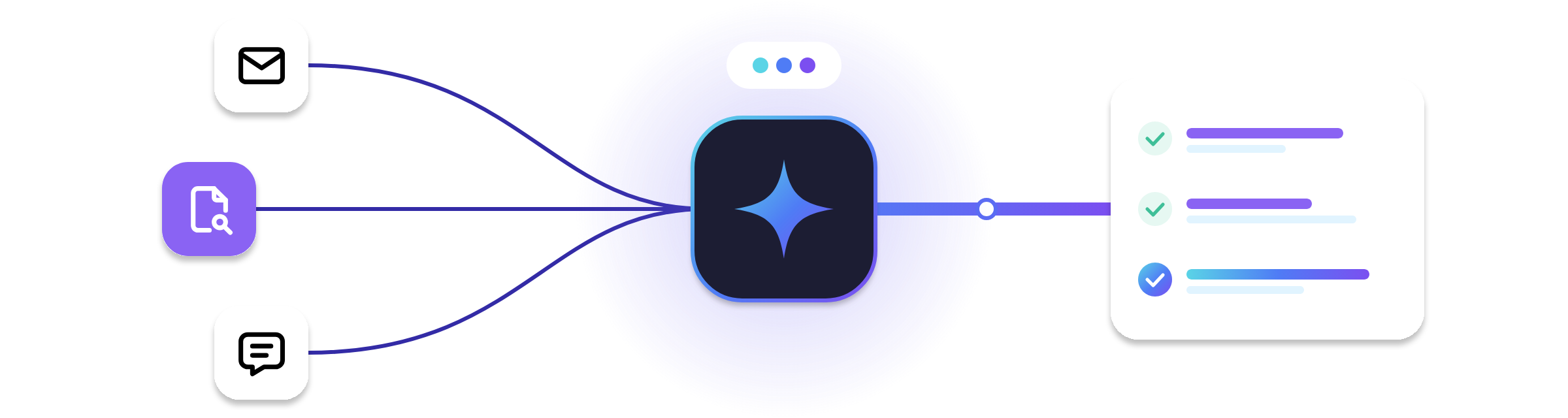
The AI use cases we look for
Seven patterns that show up in almost every business. Most companies have at least three of them running today, unaddressed.
Work that follows a pattern
Intake, triage, reconciliation, data entry, reporting. Volume with a repeatable shape is the fastest AI value in most businesses and usually the easiest to measure.
Decisions made from scattered information
When someone has to check three systems before answering, there is a case for bringing the answer to them.
Knowledge that exists and cannot be found
Documentation, tickets, past decisions and policy. If the same question gets asked every month, the answer is already written somewhere.
Moments where your users get stuck
Search that does not understand intent, forms that ask for what you already know, onboarding that loses people. AI in the product usually pays off at friction points rather than in new features.
Predictions the business already makes informally
Someone is estimating demand, risk or churn from experience. That is a model waiting to be built.
Content produced repeatedly
Proposals, descriptions, summaries, reports. Drafting is where generative AI is most reliably useful.
Work your team does to feed a system
Copying between tools, formatting, chasing status. Often the cheapest win available and the one nobody thinks to mention.
What the roadmap includes
Not a slide deck of ideas. A plan with numbers attached, and a first project you can approve.
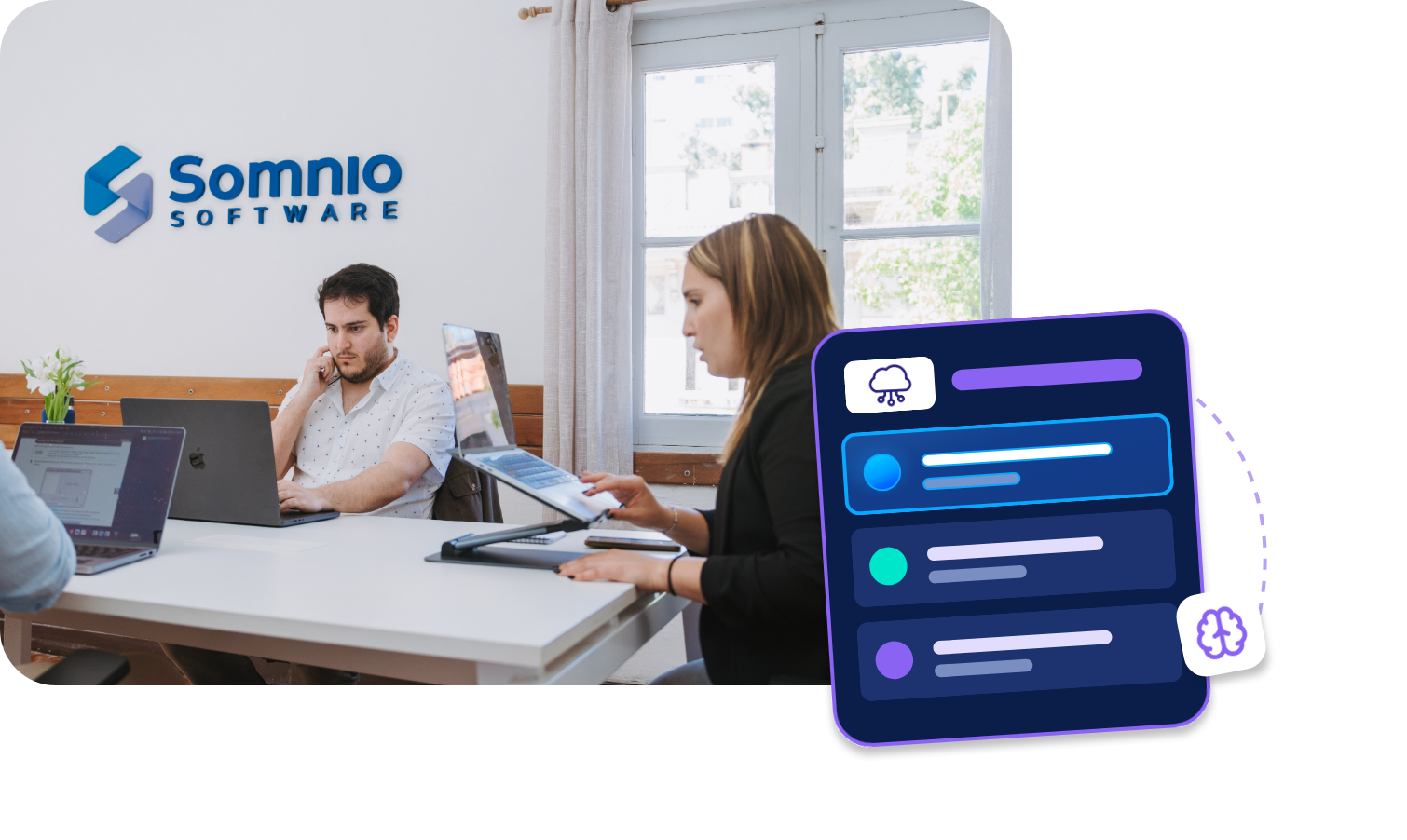
A prioritized set of AI use cases
Sequenced by value and by how quickly each one can be in production.
A number on each one
What the current state costs, what the AI version would cost to build and to run, and what the difference is worth over a year.
A data readiness read
Which cases your data supports today, and what the others would need first.
A build or buy recommendation per case
Including where an existing product already does it well.
A defined first project
Scope, success metric and what it would take, so the roadmap starts with something you can approve rather than a phase two.
How the assessment runs
Map
Working sessions with the people who own the processes and the product, plus a review of your data and tooling.
Filter
Every candidate through the three gates, with a technical lead assessing feasibility and cost.
Rank and sequence
Value against effort, dependencies named, and a roadmap you can take to a budget conversation.
The AI we recommend is AI we operate
An AI-native product agency
AI runs inside our own delivery. The AI we recommend is AI we operate.
We build the roadmap we write
Feasibility and effort estimates come from a team that ships AI features into production.

Start with one project. Build from there
The assessment ends with a first project ready to approve, with the scope, the metric and the team defined. The roadmap gives you what comes after it, and each project builds on the data, the integrations and the practices the last one put in place.


Ready to Start Your Journey?

I would love to talk to you about your project or needs.
Fill in the form or send us an email to hello@somniosoftware.com
Got an idea? We’ve got the skills.
Fill out our contact form and we’ll get in touch!
Schedule a call
Feel free to select a time at your convenience!
Questions worth asking
Still have some doubts?
No worries, here are some frequently asked questions that may help you.
An AI consultant looks at your processes, your product and your data and identifies where AI would create measurable value. At Somnio, a technical lead assesses feasibility and cost at each step, so you leave with a prioritized roadmap and a first project you can approve, not a list of ideas.
We rank every candidate by value against effort. Each one gets a number: what the current state costs, what the AI version would cost to build and to run, and what the difference is worth over a year. We also check which cases your data supports today. The first project is the one that combines clear value with the shortest path to production.
It is a review of whether your data, tooling and processes can support the AI use cases you have in mind. Ours tells you which cases your data supports today, what the others would need first, and where an existing product already does the job well enough to buy instead of build.
A workshop usually ends with a list of ideas. The assessment ends with a plan that has numbers attached: prioritized use cases, the cost and value of each one, a build or buy recommendation, and a first project with its scope, success metric and team defined. The estimates come from a team that ships AI features into production.