
AI that solves real business problems
Somnio helps companies find where AI creates value, prove it on real data, and run it in production. AI features inside your product, agents that remove manual work, and generative AI tools your team actually uses.

Most companies have already tried AI. Most are still waiting for the value
A workshop produced a long list of ideas and no way to choose between them. A prototype worked in a demo and then met real data, real latency, and a security review nobody scheduled. Leadership asked what the initiative was worth, and the answer came back qualitative, so it lost budget to something with a number attached.
The gap is rarely the model. It is knowing which use case is worth building, and then building it to survive production.
Five ways in
AI Consulting & Strategy
We map your processes and product, then filter every candidate use case through three gates: what the current state costs, whether your data supports it, and whether compliance allows it. You leave with a ranked list, an estimate of what each one is worth, and the ones we would skip.
Explore AI consultingAI in Product
AI features your users touch: assistants inside the product, smart search, recommendations, personalization, predictive features, and AI-powered journeys.
Explore AI in ProductGenerative UI
Interfaces that assemble themselves at runtime from your own components, so the product responds to what a user is trying to do instead of showing everyone the same screen. Built in Flutter, which gives you one implementation across mobile, web and desktop, and governed so what the model composes stays inside your design system and never invents a screen you did not approve.
Explore GenUIAI Agents & Automation
Agents and automations for the workflows that consume your team: intake and triage, back-office reconciliation, support, reporting, sales and recruiting operations. Usually the fastest return and the easiest to measure.
Explore AI agentsGenerative AI Solutions
Internal copilots, knowledge assistants, chatbots, document analysis and content generation tools, built on your data.
Explore generative AINot sure which use case is worth building?
Start with an assessment and get a ranked list.
Book an AI assessmentDecide how much you are delegating before you build
“We want AI to do X” is four different projects depending on how much authority the AI gets. Choosing the level deliberately is what determines whether the thing survives a security review.
Most vendors demo full autonomy because it demos best. In regulated environments, most products should spend their first year at Drafted or Delegated, and move up when measured error rates say they have earned it.
What you end up holding
You own the code, the prompts, and the evaluations. Your data stays yours and is never used to train a model.
A ranked list of AI opportunities
With an estimate of what each one is worth, and the ones we recommend skipping.
A working feature or agent in production
Integrated into your product or your workflows.
An evaluation suite
It tells you how often the output is right, on your data, and alerts you when that number moves.
We are AI native
Our own delivery runs on AI. Engineering uses it for code generation, review, debugging, testing, and documentation. Product and design use it for research, requirements, prototyping, and planning. Quality and delivery use it for test automation and reporting. Every role on the team is trained on where it works and where it does not.
That is the difference between an agency that sells AI and one that has been running it in production on its own work. When we tell you a use case will not survive real data, it is because we have watched one fail.
AI Engineer
LLM integration, agents, RAG, evaluation harnesses, and production guardrails.
Tech Lead
Architecture, the integration into your existing product, and the cost model.
Product Manager
Use case ranking, success metrics, and the control group.
Built for environments where a wrong answer has a cost
Owned. Your data stays yours and is never used to train a model.
Isolated. Deployed inside your boundary when your compliance posture requires it.
Measured. Every AI feature ships with an evaluation suite and a quality threshold below which it does not go live.
Accountable. A named human is accountable for every AI-generated output.
Not every problem is an AI problem. We pressure-test every proposed use case against data availability, production viability and regulatory fit. If a case does not hold up, you hear it in the assessment.

Where AI has to be handled carefully
Three industries where a wrong answer has a cost, and where we have shipped AI under audit.
Success cases
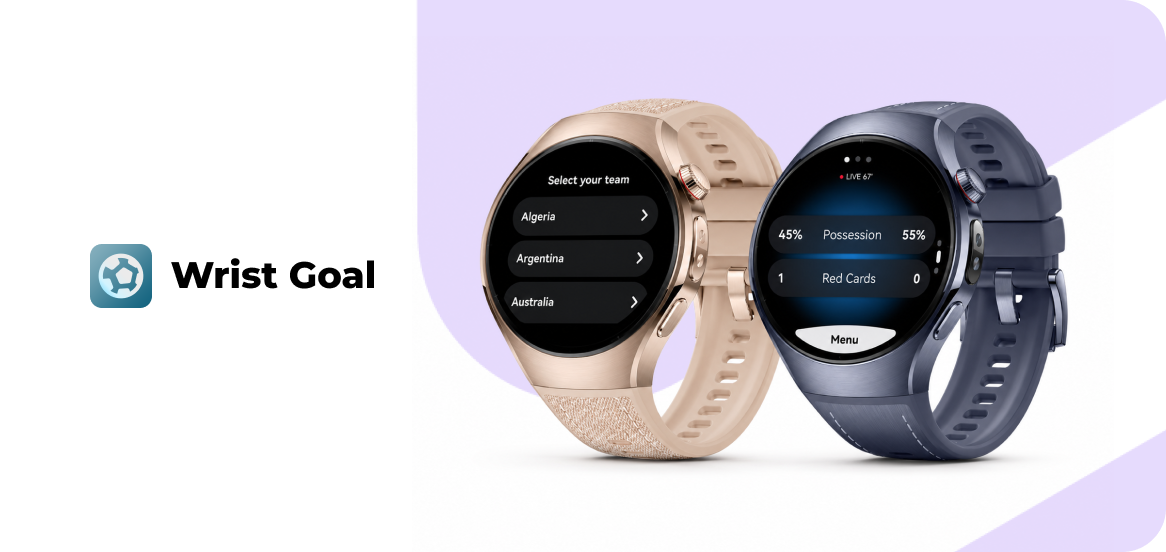
Wrist Goal is a smartwatch app delivering live football scores and match events to Huawei wearables, built by Somnio and launched natively on HarmonyOS NEXT with a template-based architecture ready to scale to future tournaments.
.png)
We partnered with the Canadian Automobile Association (CAA) to elevate member services through technology, delivering a seamless experience across Ontario.
What our clients say
“Their approach started with a Product Discovery phase, including user research, UI/UX design improvements, and technical assessments to ensure scalability. Their proactive work made a real difference in the project's success”

“Somnio Software has delivered an MVP that meets the changing needs of AI users. They've communicated effectively, have been highly responsive, and their project management is excellent. Their developers have become thought partners.”

Start with an assessment
Tell us the process or the product, and what you have already tried. We will tell you which use cases clear the three gates, and which ones to skip.



Ready to Start Your Journey?

I would love to talk to you about your project or needs.
Fill in the form or send us an email to hello@somniosoftware.com
Got an idea? We’ve got the skills.
Fill out our contact form and we’ll get in touch!
Schedule a call
Feel free to select a time at your convenience!
Questions worth asking
Still have some doubts?
No worries, here are some frequently asked questions that may help you.
Identifying where AI creates measurable value in a business, then building and running those systems in production. It covers AI features inside your product, AI automating internal operations, and the engineering practice that keeps both working.
Three gates. Value: what the current state costs in hours, error rate, rework, or churn. Feasibility: does the data exist, is it clean enough, what is the cost and latency per call? Permission: do compliance and data residency allow it? A use case has to clear all three.
That is individual productivity, and it means your team is fluent. What it is not: AI inside your product that your customers use, or an automated workflow that runs without a person in a chat window. Those need integration, evaluations, guardrails, and monitoring.
No, and neither can anyone honest, because these are probabilistic systems. What we do is measure it. We build an evaluation suite before we build the feature, so you have a number for how often it is right on your data, and a threshold below which it does not ship.
No. Your data stays yours. Where your compliance posture requires it, we deploy inside your own boundary so data never leaves your environment.
Tell us what killed it. It is usually one of three things: the use case was never valuable enough, the data could not support it, or nobody built the production path. The first two are what the assessment is for. The third is most of the engineering work.
An assessment is a few weeks. A prototype that proves a use case on real data is a few more. A production build depends on integration complexity. If someone quotes you a production AI system in two weeks, ask what happens when the model is unavailable.
Then we say so in the assessment, and you have saved the cost of a pilot. Sometimes it is a process problem, a data problem, or a case where an off-the-shelf product does it better and cheaper.
Frontier models from any major vendor, and open weight models where the situation calls for them. Claude, GPT and Gemini for frontier work, with routing between model tiers by task so you are not paying for the largest model on a job that does not need it. Llama, DeepSeek, Gemma and Mistral where cost at volume, self-hosting or fine-tuning matters more than raw capability. Where they run is a separate decision: direct through the vendor's API, or inside your own cloud account through Bedrock, Vertex AI or Azure when data residency requires it. We select per use case on capability, latency, cost and data residency, and we build so that changing the model does not mean rebuilding the feature.