
AI features that hold up outside the demo
We do the engineering that takes AI from a promising prototype to something you can actually ship: retrieval, evaluation, guardrails and the infrastructure that keeps it reliable and affordable as real people start using it.

What AI engineering covers
The work between "the model gives a good answer sometimes" and "this feature is reliable enough to put in front of users." That gap is where most AI projects get stuck, and it’s where we live.
LLM application development
Chat, assistants, agents and AI features built into your product.
RAG and retrieval
Grounding answers in your data so they're accurate and current, not invented.
Evaluation and testing
Measuring output quality against a real benchmark, so you know a change helped instead of just hoping it did.
Guardrails and safety
Catching the wrong, unsafe and off topic outputs before a user ever sees them.
Fine tuning and prompt engineering
Getting the behavior you need from the smallest model that can deliver it.
Cost and latency
Keeping responses fast and the bill sane as usage grows.
Data & Analytics builds the data foundation this draws on. Backend Development and DevOps & Cloud run it in production.
What we work with
Models and providers
Frameworks
Retrieval
Orchestration
Evaluation
Serving and ops
Guardrails
How we work it
Prove it's worth building first
We start with the narrowest version that tests whether the model can actually do the job, before anyone commits to the full feature. It saves you from falling in love with something that won't hold up.
Ground it and measure it
We connect it to your data with retrieval and build an evaluation set early, so quality becomes a number you can watch instead of a feeling.
Ship with guardrails
We handle the bad outputs, the cost and the latency before it reaches users, because in production the wrong answer is the one people remember.
Who does this work

AI Engineers
Building the retrieval, orchestration and evaluation, inside your stack.

Tech Lead
The architecture, the model choices and the cost and latency tradeoffs.


Where this capability fits
Success cases
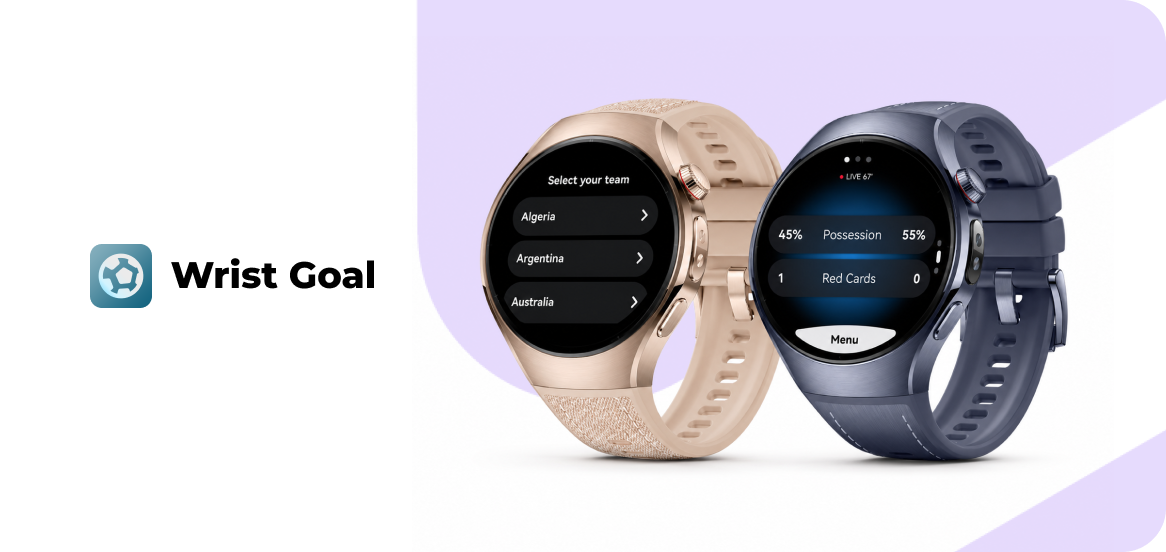
Wrist Goal is a smartwatch app delivering live football scores and match events to Huawei wearables, built by Somnio and launched natively on HarmonyOS NEXT with a template-based architecture ready to scale to future tournaments.
.png)
We partnered with the Canadian Automobile Association (CAA) to elevate member services through technology, delivering a seamless experience across Ontario.
What our clients say
“Their approach started with a Product Discovery phase, including user research, UI/UX design improvements, and technical assessments to ensure scalability. Their proactive work made a real difference in the project's success”

“Somnio Software has delivered an MVP that meets the changing needs of AI users. They've communicated effectively, have been highly responsive, and their project management is excellent. Their developers have become thought partners.”


Ready to Start Your Journey?

I would love to talk to you about your project or needs.
Fill in the form or send us an email to hello@somniosoftware.com
Got an idea? We’ve got the skills.
Fill out our contact form and we’ll get in touch!
Schedule a call
Feel free to select a time at your convenience!
FAQs
Still have some doubts?
No worries, here are some frequently asked questions that may help you.
AI engineering is the discipline of building reliable production software around AI models: retrieval, evaluation, guardrails, cost control and the infrastructure to serve it. It's different from research, because the goal isn't a better model, it's a feature that behaves predictably for real users.
Retrieval augmented generation is a technique that grounds an AI model's answers in your own data by pulling in relevant documents at query time and giving them to the model as context. It's how you get answers based on your content instead of the model's general training, and it cuts down on invented facts.
Almost never, and we'll say so. Most products are best served by a strong existing model with good retrieval and prompting around it. Fine tuning and custom models solve a narrower set of problems, and if yours turns out to be one of them we'll tell you. Otherwise it's cost and complexity you don't need.
By grounding answers in your data with retrieval, adding guardrails that check outputs, and measuring accuracy against an evaluation set so regressions get caught. You can't remove the risk entirely, so we design for it rather than pretend it's gone.
By using the smallest model that does the job, caching what repeats, and tracking token spend per feature from day one. Cost and latency are things we design around from the start, not a surprise you find on the bill later.
It depends on the setup, and it's a decision we make with you, deliberately: which provider, what data leaves your systems, and what stays inside your own infrastructure. We'll lay out the options and their tradeoffs before anything gets wired up.