

Most teams that suffer budget and timeline overruns blame execution: a sprint that ran long, an integration that cost more than expected, requirements that shifted mid-build.
But trace those incidents to their origin and you almost always find the same thing: an architecture decision made on assumptions nobody validated.
Why scope creep starts before development
Discovery and delivery are different things. Delivery is building what is already defined. The product discovery process turns an ambiguous idea into something you can estimate, budget, and build without structural surprises.
When that work gets skipped or reduced to a couple of user interviews and a set of wireframes, the ambiguity does not disappear.
It moves into the backlog, where every sprint uncovers it as change orders, refactors, and uncomfortable conversations about money.
Scope creep is rarely a discipline problem, it is a symptom that the team started building before knowing what it was building at the technical level.
That means understanding the limits of the APIs you are integrating with, the constraints of the target platform, the viability of critical features, and the architecture trade-offs that will shape everything that follows.
What technical questions discovery has to close first
A serious discovery goes well beyond mapping user personas and customer journeys. Those tools help you understand what to build, but they do not answer whether it can be built, with what stack, in how long, and with what risks.
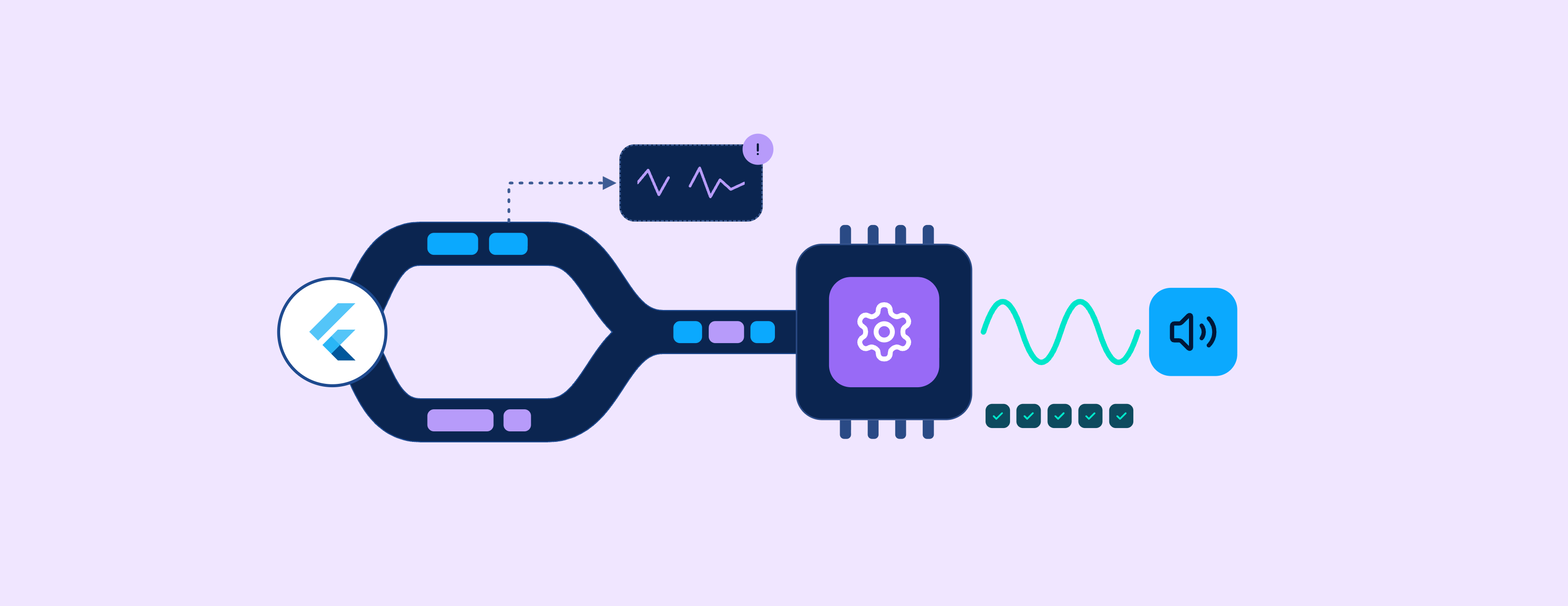
- Integration viability requires an experiment proving each API or third-party service works within the parameters the product needs, before committing to an architecture. For MyBotPal, the voice assistant we built for Huawei on HarmonyOS NEXT, discovery had to validate that offline capabilities (GPS, weather, multi-language) worked under Huawei's privacy standards.
Skipping that step would have started the project on assumptions that break in the first weeks of build. - Platform limits require functional prototypes, real running code, not mockups, to detect how features behave on each surface. When you target mobile, web, and desktop from one Flutter codebase, each environment behaves differently in ways only real execution reveals, combining Flutter with Next.js, Kotlin, Swift, Nest, Firebase, or AWS through full product development as the product needs.
- Architecture trade-offs determine the cost and risk profile of everything that follows. Decisions like serverless versus containers, real-time via WebSockets versus polling, and a modular monolith versus microservices from day one have concrete consequences discovery needs to surface, evaluate with data, and document so the build budget reflects reality.
From ambiguous idea to estimable scope
The process starts with technical hypotheses, falsifiable statements about how the product should work, the same rigor behind spec-driven development.
"The Flutter codebase can handle a forex trading view with updates every 500ms without degrading performance." That second hypothesis was exactly what we had to validate on Bursa+, where we built the first forex trading view in Flutter.
Without a prior experiment, that feature would have been a bet. Each hypothesis becomes a viability experiment: a functional prototype, a performance benchmark, an integration test with an external service, or a technical spike evaluating a library.
What matters is that each experiment produces a binary result, viable or not, and when it is viable, it generates the concrete constraints that bound scope.
That boundary is what turns ambiguity into estimable scope, the same rigor that matters most on healthcare products where every integration carries compliance weight.
When discovery ends, you have a list of technically validated features, a proposed architecture with documented trade-offs, and a set of constraints that make the build estimate comparable and defensible.
A discovery sprint like this runs a fraction of the time and cost of a month of development with a full team. Investing a modest share of the total budget in discovery reduces the risk of overruns that historically can double that budget.
On projects where scope carried real technical uncertainty, that upfront investment is what allowed the team to close a fixed scope and execute without significant change orders.
When there is enough validation to build
- All critical integrations were tested with functional prototypes, not assumptions about how the external service should behave.
- Platform limits are documented with real code evidence showing behavior on each target surface.
- The proposed architecture has explicit trade-offs, and the client understands the implications of each decision before the build starts.
- The resulting scope can be estimated in sprints with an error margin under 20%, making the budget defensible to any stakeholder.
If any of those questions gets answered with "more or less" or "we'll see during development," discovery is not done. That "more or less" is exactly what later becomes a change order that breaks the budget.
The cost of skipping discovery shows up in lost weeks and burned budget, but also in trust. A CTO who presents a budget to the board and then has to ask for significantly more loses credibility.
A team that refactors the architecture in sprint 6 because an integration did not work as assumed loses velocity and morale, the opposite of the operating discipline behind our Great Place to Work certification. Those costs are real even when they never show up as a line item.
The sequence that minimizes that risk is clear: a closed discovery with concrete technical deliverables, then a fixed-scope build based on that discovery, and only after that, expansion.
When that sequence gets followed, the budget becomes predictable because the surprises got found and resolved while they were cheap to find, not once a ten-person team was already billing weeks.
If your team is about to start a new product, a discovery sprint is where that validation happens, and staff augmentation can cover specialized technical experiments discovery needs when your team lacks that specific expertise.
Frequently asked questions
Does technical discovery replace product or UX discovery?
No, it complements it. Product and UX discovery define what to build and for whom. Technical discovery validates whether that can be built, with what constraints, and at what cost. Both should run in parallel or in tight sequence for the deliverables to be useful.
What happens if discovery reveals a critical feature is not viable?
Finding that out early in discovery costs a fraction of finding it out mid-build with a full team already billing weeks. A discovery that eliminates an unviable feature before the build already paid for itself.
Is a short discovery sprint enough for large projects?
It depends on the number of critical integrations and architectural complexity. On projects with many external dependencies or very open platform decisions, discovery needs more time, but the principle stays the same: time invested before the build is always cheaper than time lost during the build to unvalidated assumptions.
How do you justify the cost of discovery to a client who wants to start immediately?
The most effective comparison is showing the cost of a typical change order against the cost of discovery. A month of development lost to an integration that did not work as assumed usually exceeds the entire discovery sprint budget several times over. Once that math is visible, the conversation changes.
At Somnio Software, we work closely with companies to design and build high-quality digital products using modern technologies and development best practices.
If you're looking for a trusted partner to bring structure, expertise, and innovation to your next software project, we'd love to connect. Contact us to learn how we can help turn your product vision into reality.