

Mobile app architecture is a set of decisions made before the first feature ships, and a handful of them are close to irreversible.
State management, offline behavior, and API boundaries cost weeks to change once fifty screens depend on them. The rest can be fixed in an afternoon.
Why Mobile App Architecture Is a Business Decision
A feature that takes two days in a well-structured codebase can take two weeks in a poorly structured one.
Multiply that gap across a year of sprints and the difference between good and bad mobile app architecture shows up as wasted engineering time, missed release windows, and bugs that keep coming back.
Most product owners treat architecture as something engineers figure out on their own. That instinct makes sense on the surface, and it misses something specific.
Mobile application architecture refers to the structural decisions made before a single feature gets built: how your app manages state, whether it can work offline, how tightly it couples to the backend, and whether two teams can ship features in parallel without stepping on each other.
These choices become the rails everything else runs on. When those rails bend, every sprint after that carries extra weight.
We've seen this firsthand across projects like CAA, where the platform serves 7 million+ members and any structural misstep would cascade into dispatch delays.
ProWallet, a fintech product for the U.S. construction industry, is the same story from another angle, where payment flow reliability depends entirely on how cleanly the architecture separates concerns. In both cases, the decisions made in the first weeks shaped what was possible for years afterward.
State Management and Offline Behavior
If you ask a senior engineer which architectural choice is hardest to change after launch, state management will rank at or near the top.
State management determines how your app tracks what's happening, from the contents of a form to whether a user is authenticated to the sync status of cached data.
Patterns like MVVM, BLoC, and Riverpod each impose a different structure on how data flows through the app. Switching between them once the codebase has 50+ screens means rewriting the connective tissue that holds every feature together.
A state management migration on a mid-size app typically burns four to eight weeks of senior developer time, with regression risk across every screen that touches shared data.
That's why choosing between BLoC and Riverpod early matters more than most product roadmap decisions made in the same timeframe.
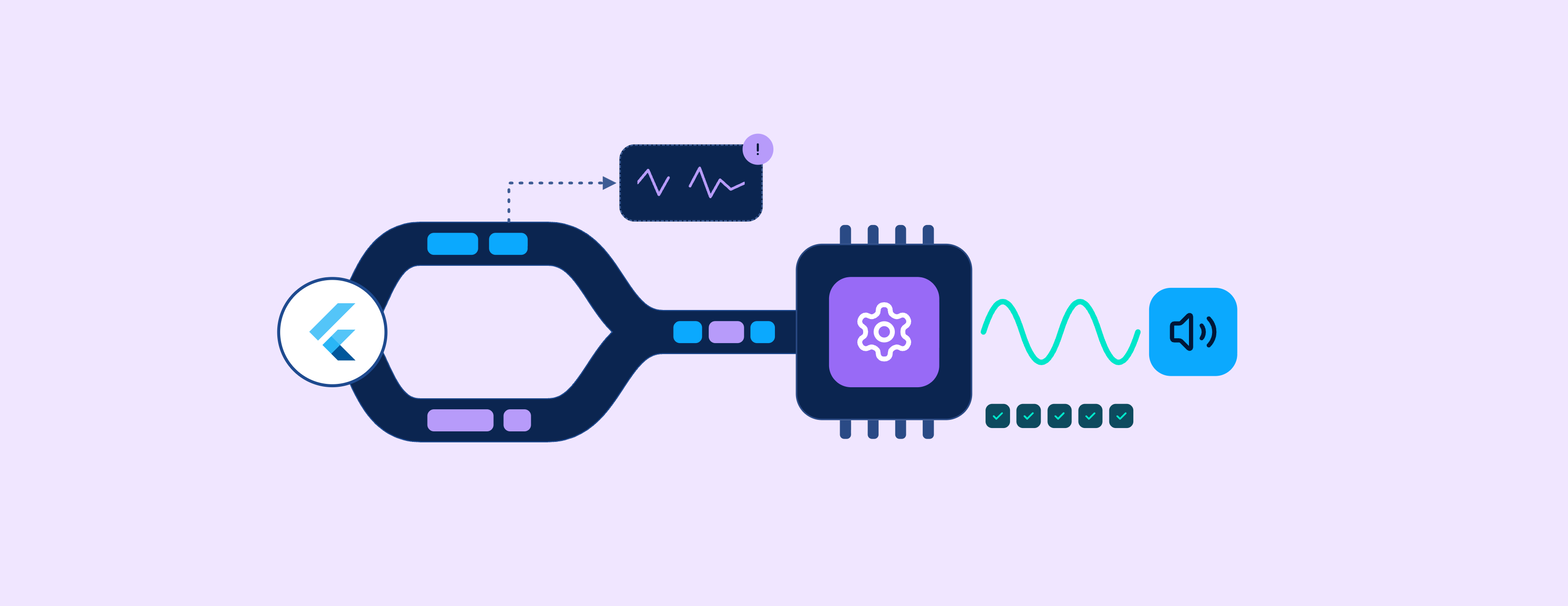
Offline behavior compounds this further because it depends entirely on how state is managed. MyBotPal, the AI voice assistant we built for Huawei's HarmonyOS NEXT wearable, needed to function with GPS, weather, and multilingual responses even without connectivity.
Retrofitting offline support into an app that wasn't designed for it means adding a local persistence layer, conflict resolution logic, and sync queues that touch almost every data path.
When offline is a day-one requirement, architecture bends around it naturally. When it arrives as a nice-to-have in sprint 14, the cost can exceed the original feature budget.
For a deeper look at how Flutter's rendering pipeline and widget tree interact with these patterns, the Flutter architecture explainer covers the engine internals.
API Boundaries, Modularity, and Architecture Diagrams
Tight coupling between your mobile app and a specific backend API structure is the architectural equivalent of pouring concrete around your plumbing. It works fine until you need to change something.
The mobile app architecture patterns that survive contact with reality share one trait: they isolate the app's domain logic from the shape of any particular API response.
A Three-Layer Architecture That Holds Up Under Change
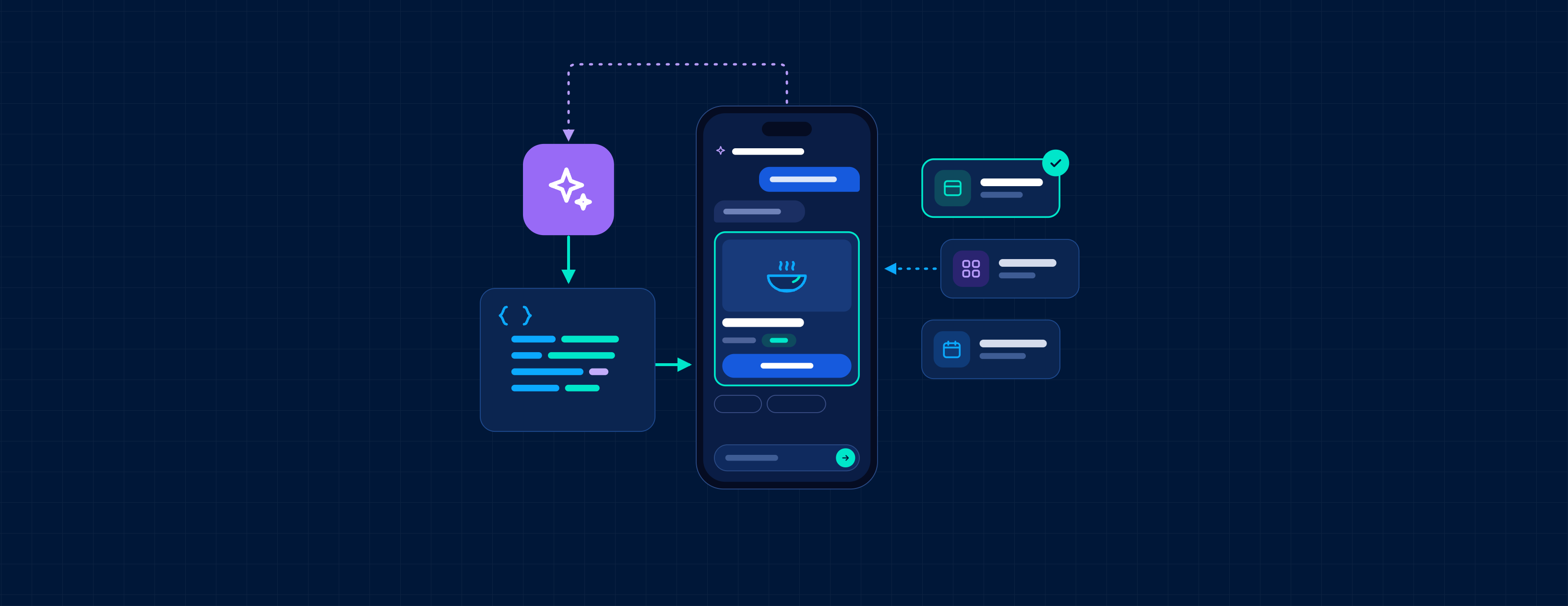
Picture a simple mobile app architecture diagram with three layers. At the top sits the UI, built with Flutter widgets or native views in Kotlin and Swift.
In the middle lives a domain layer that contains business rules and state, agnostic to where data comes from. At the bottom, a data layer handles API calls, local storage with Firebase or a local DB, and sync logic.
When these layers communicate through well-defined interfaces, swapping a REST backend for GraphQL or migrating from Firebase to AWS affects only the bottom layer. When they don't, a backend change ripples upward into every screen.
Modularity determines whether your team can scale. On the Tracer Golf project, with 13,200+ downloads in the Toronto market, splitting features into independent modules meant new developers could own a vertical slice without needing to understand the entire codebase.
On CAA's driver dispatch tools, modularity let us run the tire change scheduling flow and the rescue dispatch flow as parallel workstreams with a shared design system but separate business logic.
At Somnio, we've built 170+ applications across stacks that include Flutter, Next.js, Kotlin, Swift, Nest, Firebase, and AWS. The projects that scale cleanly all share this trait: architecture for mobile app development across platforms was treated as a set of boundaries rather than a monolith with folders.
Cost of Reversal by Decision Type
Decision Type | Reversal Cost | Typical Time to Undo |
|---|---|---|
UI theming and navigation patterns | Low | A few days |
Dependency injection setup and code generation pipelines | Medium | One to three weeks |
State management migration, offline architecture, and API contract restructuring | High | One to two full months, with significant regression risk |
Which Decisions Deserve a Dedicated Spike?
Before locking in a structural choice, run through these signals.
- Will this decision affect more than three feature areas?
- Does reversing it require touching files across multiple modules?
- Will a new developer need to understand this choice before they can ship their first PR?
If the answer to two or more of these is yes, you're looking at a high-reversal-cost decision that deserves a dedicated discovery phase rather than a standup conversation.
Signs Your Architecture Is Slowing the Team
Architectural debt rarely announces itself as an architecture problem. It shows up as slower velocity, higher incident counts, and engineers who can't explain why simple things take so long. Four metrics cut through the noise.
Four Metrics That Reveal Architectural Debt
- Developer onboarding time is the first signal. If a new engineer needs more than two weeks to ship a meaningful pull request, the codebase likely has implicit conventions, circular dependencies, or undocumented state flows that force tribal knowledge transfer.
- Refactor hours as a percentage of total sprint capacity tell you whether you're paying an architecture tax. Healthy codebases run below 15%, and once refactoring consistently eats 25% or more, that tax is compounding every sprint.
- Test coverage gaps concentrated in integration tests rather than unit tests suggest that components are too tightly coupled to test in isolation, which points to boundaries that were never properly sealed.
- Incident frequency tied to unexpected side effects points to state leaking across boundaries that should be sealed, and it tends to get worse as the codebase grows.
These aren't engineering vanity metrics. They predict how fast you can ship next quarter and how much of your budget goes toward moving forward versus patching what's already built.
What a Product Owner Should Do With This
Product owners who track these four signals make better roadmap calls, because they can see the cost of structural debt before it compounds into a rewrite conversation.
The reversal-cost table is the practical filter. Low-cost decisions belong in a standup. High-cost ones belong in a spike with a written outcome, before the sprint that depends on them gets planned.
For a product expected to live several years, that filter is most of the architecture governance a non-technical owner actually needs.
Frequently Asked Questions
At what stage of a project should architecture decisions be locked in?
The highest-cost decisions, including state management, offline behavior, and API contract design, should be resolved before the first sprint begins. Decisions made later carry the weight of everything already built around them, which drives up the cost of any reversal significantly.
Can a poorly architected app be fixed without a full rewrite?
In many cases yes, but the effort is substantial. Migrating state management on a mid-size app typically burns four to eight weeks of senior developer time, and offline architecture changes touch nearly every data path in the codebase. An architectural assessment identifies which problems can be fixed incrementally.
How does architecture affect how quickly a new developer can contribute?
Well-modularized codebases let new developers own a vertical slice without needing to understand the entire system first. When architecture is not clearly defined, implicit conventions and undocumented state flows force knowledge transfer that can delay a first meaningful pull request by weeks.
What is the difference between modularity and separation of concerns in a mobile app?
Separation of concerns describes how individual layers such as UI, domain, and data stay independent from each other within a feature. Modularity describes how distinct features stay independent from each other across the codebase. They reinforce each other, because a well-separated feature is much easier to extract into its own module when the team needs to scale.
Does the choice of technology stack affect how these architectural principles apply?
The principles apply regardless of stack, but the specific patterns and tooling differ. Flutter codebases use BLoC or Riverpod for state management, while native Kotlin and Swift apps have their own ecosystem conventions. The underlying question of where to draw the boundaries between layers remains the same across all of them.
Working With Somnio Software
If you're searching for a trusted software development partner, look no further. Contact us today to learn how we can help you turn your vision into reality with our tailored, high-quality solutions.