

Healthcare app development is gated by requirements that have little to do with product quality: HIPAA exposure, consent that can be revoked and audited, integration with hospital systems, and store review for medical categories.
Each one is cheap to design for in week one. Each one is expensive to retrofit in month six.
What makes healthcare app development different
Most software ships with a margin for error. You push a buggy release, roll back, iterate.
Healthcare app development doesn't give you that runway. A misconfigured access control on patient data can trigger an Office for Civil Rights investigation, and a store reviewer who flags your app as an uncleared medical device can pull it from distribution overnight.
The gap between a working app and a shippable health app is almost entirely regulatory, and it shows up in places most engineering teams don't anticipate until they're already building.
What makes medical apps harder to build comes down to three overlapping forces that every team must account for before writing production code.
- HIPAA (and depending on jurisdiction, GDPR or PIPEDA) dictates how every byte of patient-identifiable data moves through your system, who can see it, and how long it persists.
- Clinical system integrations like HL7 and FHIR operate on standards designed for hospital IT departments, with handshake protocols and data models that don't map cleanly to modern REST APIs.
- App stores apply heightened scrutiny to anything classified under medical categories, requiring evidence of regulatory clearance or detailed explanations of why your app is exempt.
Miss any one of these and you're blocked, regardless of how solid the product is.
Data segregation, HIPAA exposure, and architecture
Whether your health app is subject to HIPAA depends on a specific question: does your app create, receive, maintain, or transmit Protected Health Information (PHI) on behalf of a covered entity such as a provider, payer, or clearinghouse? If yes, you're a business associate and HIPAA applies in full.
If your app collects health data directly from consumers without touching a covered entity's systems, you may fall outside HIPAA's scope, but you still face FTC enforcement under the Health Breach Notification Rule. Map this exposure before writing a single line of code.
Data segregation is where architecture decisions become compliance decisions. PHI needs to live in its own encrypted data store, separate from analytics, marketing, and general app data.
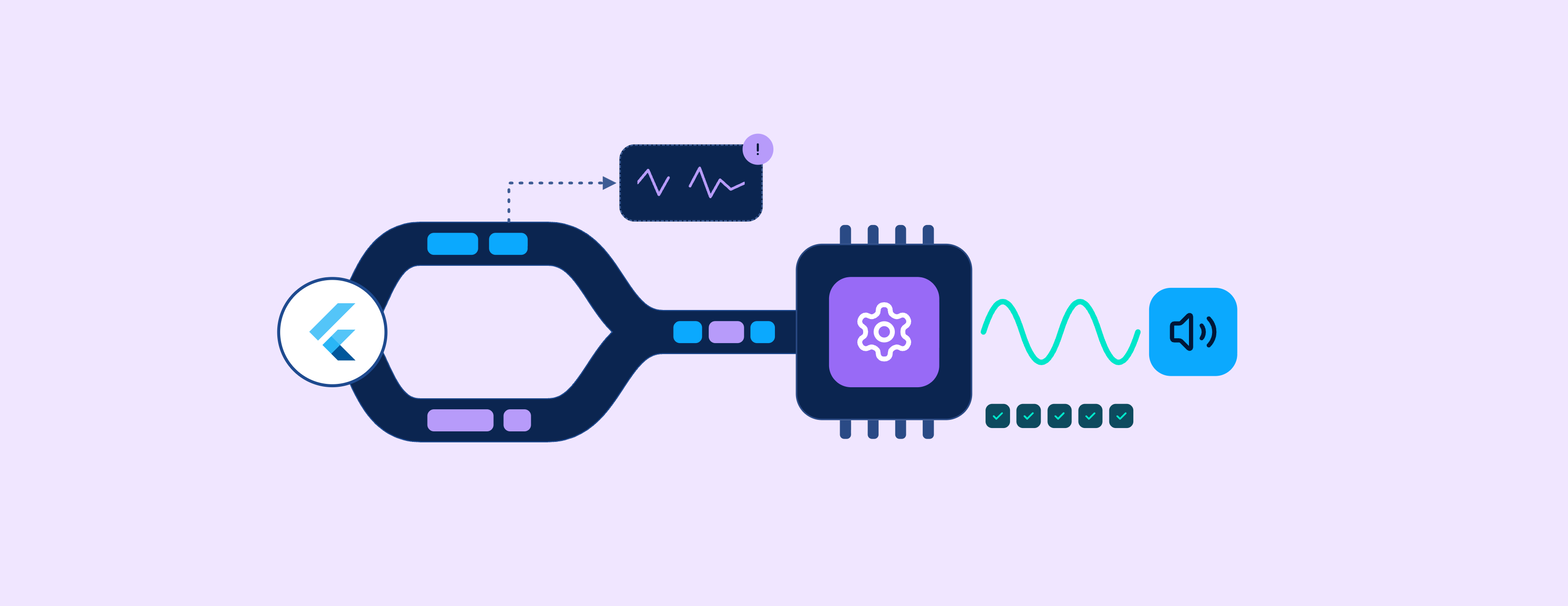
A pattern that works well in production uses a Flutter frontend for iOS, Android, and web from one codebase, Nest.js APIs handling business logic and access control, a dedicated FHIR proxy service that translates between your internal data models and clinical systems, and AWS infrastructure on HIPAA-eligible services: RDS with encryption at rest, S3 with bucket policies, CloudWatch for logging.
Firebase can handle auth and push notifications. PHI storage should stay on HIPAA-eligible AWS services where you sign a Business Associate Agreement.
For audit logging, every access to PHI needs an immutable trail. A minimal schema looks like this:
audit_events
├── event_id       (UUID, primary key)
├── timestamp      (ISO 8601, UTC)
├── actor_id       (user or service identity)
├── actor_role     (clinician, patient, system)
├── action         (read, write, delete, export)
├── resource_type  (patient_record, lab_result, prescription)
├── resource_id    (UUID of accessed resource)
├── ip_address     (source IP)
├── outcome        (success, denied, error)
└── metadata       (JSON, additional context)
Write these to an append-only store. A quick way to enforce immutability on AWS:
aws s3api put-object-lock-configuration \
  --bucket my-audit-logs \
  --object-lock-configuration '{"ObjectLockEnabled":"Enabled","Rule":{"DefaultRetention":{"Mode":"COMPLIANCE","Years":6}}}'
That six-year retention aligns with HIPAA's minimum. Log denied access attempts too, because auditors care as much about who tried and failed as who succeeded.
Consent flows, clinical integrations, and accuracy claims
Consent in healthcare apps goes beyond a Terms of Service checkbox. Patients need granular control over what data is collected, who sees it, and how long it's retained.
Each consent grant should be versioned and stored as its own record, linked to the specific data scope it covers. When a patient revokes consent, your system needs to cascade that revocation through every service that holds their data, and the audit trail needs to show it happened.
Integrating with clinical systems means working with FHIR (Fast Healthcare Interoperability Resources) and, in legacy environments, HL7v2. FHIR uses RESTful endpoints and JSON, which makes it approachable for modern dev teams.
HL7v2 uses pipe-delimited messages over TCP and is still the dominant format in many hospital EHR systems. Your FHIR proxy service handles the translation layer, exposing clean endpoints to your app while managing the complexity of ADT feeds, lab results, and medication lists coming from Epic, Cerner, or other EHR platforms.
If your app makes any claim about measurement accuracy, whether that's heart rate from a camera sensor, SpO2 from a wearable, or symptom assessment via AI, you need to back it with clinical validation data.
The FDA's Digital Health Center of Excellence distinguishes between wellness apps and Software as a Medical Device (SaMD), and the line between wellness and regulated software is often thinner than teams expect. "Track your heart rate trends" is wellness. "Detect atrial fibrillation" is SaMD and requires 510(k) clearance or De Novo authorization.
At Somnio Software, we've worked these boundaries across projects like MakeVisible, a healthcare wearable app that monitors chronic conditions and measures heart rate through the phone's camera, and MyBotPal for Huawei, which shipped under strict privacy standards on HarmonyOS NEXT.
Across 170+ applications in healthcare, fintech, and other regulated verticals, on a stack that spans Flutter, Nest, Firebase, and AWS, the architecture decisions made in week one determine whether you pass regulatory review in month six.
Store review and pre-launch checklist for CTOs
Apple and Google both apply additional review criteria to apps in medical and health categories. Apple requires that apps providing clinical data or treatment recommendations disclose regulatory status and may request evidence of clearance.
Google Play's health-related app policies require apps that contain health claims to provide supporting evidence. Both stores will reject apps that imply diagnostic capability without proper authorization.
Common rejection patterns include using medical terminology in the app description without disclaimers, requesting HealthKit or Health Connect permissions without clear justification in the review notes, and bundling clinical features in the same binary as wellness features without proper scoping.
Separating your regulatory surface area is one of the most practical steps in healthcare mobile app development. If your app has both a wellness tier and a clinical tier, consider whether they should be distinct store listings.
Before greenlighting release, walk through this checklist. Each item represents a gate that reviewers, auditors, or your own healthcare app development partner should be able to verify independently.
- PHI data flow mapped and every storage location identified.
- BAA signed with every cloud provider that touches PHI.
- Audit logging deployed to an append-only store with retention policy enforced.
- Consent management versioned, revocable, and cascading across services.
- FHIR/HL7 integration tested against target EHR sandboxes.
- Device accuracy claims reviewed by regulatory counsel and framed appropriately.
- App store metadata reviewed for medical terminology, disclaimers, and permission justifications.
- Penetration test completed and remediation documented.
What This Means Before You Greenlight Release
The regulatory surface of a health app is decided by architecture. Where PHI lives, how consent cascades, what the audit trail captures, how the clinical tier is scoped for review: each of those is an engineering decision made early and enforced by everything built on top of it.
Teams that map that surface before writing production code ship close to schedule. Teams that treat compliance as a pre-launch task find that it touches every service they already built, which is why the checklist above belongs in sprint planning rather than in the final week.
For a clinical product, that mapping is the first engineering deliverable. Everything else, including the secure implementation itself, is downstream of it.
Frequently Asked Questions
Does every health app need to comply with HIPAA?
HIPAA applies when your app creates, receives, maintains, or transmits PHI on behalf of a covered entity such as a provider or payer. Consumer-facing apps that collect health data without touching a covered entity's systems may fall outside HIPAA's scope, but they can still face FTC enforcement under the Health Breach Notification Rule.
What is the difference between a wellness app and a Software as a Medical Device?
The FDA's Digital Health Center of Excellence draws the line at diagnostic or clinical claims. An app that lets users track heart rate trends is generally considered wellness, while one that claims to detect a condition like atrial fibrillation qualifies as SaMD and requires 510(k) clearance or De Novo authorization before it can ship.
Why do app stores reject healthcare apps more often than other categories?
Both Apple and Google apply heightened scrutiny to apps that make health or clinical claims, because those claims carry patient safety implications. Common rejection triggers include unsubstantiated medical terminology in the description, missing regulatory disclosures, and permission requests for HealthKit or Health Connect without adequate justification in the review notes.
What is a Business Associate Agreement and when do I need one?
A Business Associate Agreement (BAA) is a contract required by HIPAA between a covered entity and any vendor that handles PHI on its behalf. You need a signed BAA with every cloud provider whose infrastructure stores or processes patient data, including your database host and any logging or storage services.
How should audit logs be structured for a HIPAA-compliant healthcare app?
Each audit event should capture the actor's identity and role, the action taken, the specific resource accessed, the outcome including denied attempts, and a UTC timestamp. These records must be written to an append-only store with a retention period of at least six years, which aligns with HIPAA's minimum requirement.
Working With Somnio Software
If you're searching for a trusted software development partner, look no further. We've built and shipped products in healthcare, fintech, and other regulated verticals, where the compliance surface is decided long before the launch date.
To learn how we can help you turn your vision into reality with our tailored, high-quality solutions, Contact us!