.png)
.png)
Building a strong remote work culture across eight countries is not a technology challenge. It is a people challenge. And like most meaningful people challenges, it cannot be solved with tools alone.
At Somnio Software, our team collaborates from Uruguay, Argentina, Brazil, Peru, Ecuador, Colombia, Nicaragua, and Mexico. Remote-first is not a benefit we added along the way. It is how we have worked since the beginning, and it continues to shape the way we grow, connect, and build together across Latin America.
Over the years, we have learned that the difference between a distributed team that simply works and one that truly grows together comes down to intention. The tools matter, of course. But culture is built through the way people communicate, support each other, share knowledge, and create moments of connection across distance.
This post is about how we think about remote-first culture at Somnio, and what that looks like in practice as our team continues growing in 2026.
What remote-first actually means at Somnio
Remote-first culture in a software company means that flexibility is part of the operating model, not an exception to it.
It means that people do not need permission to work from home, a café, a coworking space, or wherever they feel they can do their best work. It means that processes are designed to support asynchronous collaboration before relying on meetings. And it means that someone’s location should never define the quality of their opportunities, visibility, or impact within the company.
At Somnio, we have operated this way from the start. Today, with a team spread across eight countries, remote-first is not something we work around. It is the reality we design for.
But remote-first does not mean remote-only. And it definitely does not mean disconnected.
For us, flexibility and connection are not opposites. They need to grow together.
Why connection in distributed teams needs intention
In co-located teams, part of the culture is built naturally through proximity. The conversation before a meeting starts, the shared lunch, the quick check-in when someone notices a colleague is having a hard day. Those moments are not always planned. They happen because people share the same physical space.
In distributed teams, those moments do not appear on their own. They need to be created with care.
That is one of the biggest challenges of remote work culture in tech companies: how do you create real human connection when your team is spread across different countries, cities, and time zones?
At Somnio, our answer has evolved with the team. Today, it combines two complementary approaches: in-person coworking gatherings and shared virtual rituals.
Both help us protect something we deeply value: a culture where people feel part of something bigger than their daily tasks.
Coworking spaces as a cultural anchor
In cities where several Somniers live close to each other, Somnio began encouraging coworking as a way to bring people together in person. The idea was simple: give team members who usually collaborate remotely the opportunity to share a physical space, work side by side, and strengthen the kind of connection that screens cannot always fully create.
These gatherings are not about replacing remote work. They are about adding another layer of connection to it.
Sometimes people meet to collaborate on a project. Sometimes they simply choose to work from the same place for the day. And sometimes the value is not in what gets discussed, but in the experience of sharing a room with people they usually only see through a screen.
That kind of connection cannot be forced. It grows when people genuinely enjoy working together and when the company supports the conditions that make those moments possible.
That is what coworking gives distributed teams: small but meaningful shared experiences that strengthen trust over time.
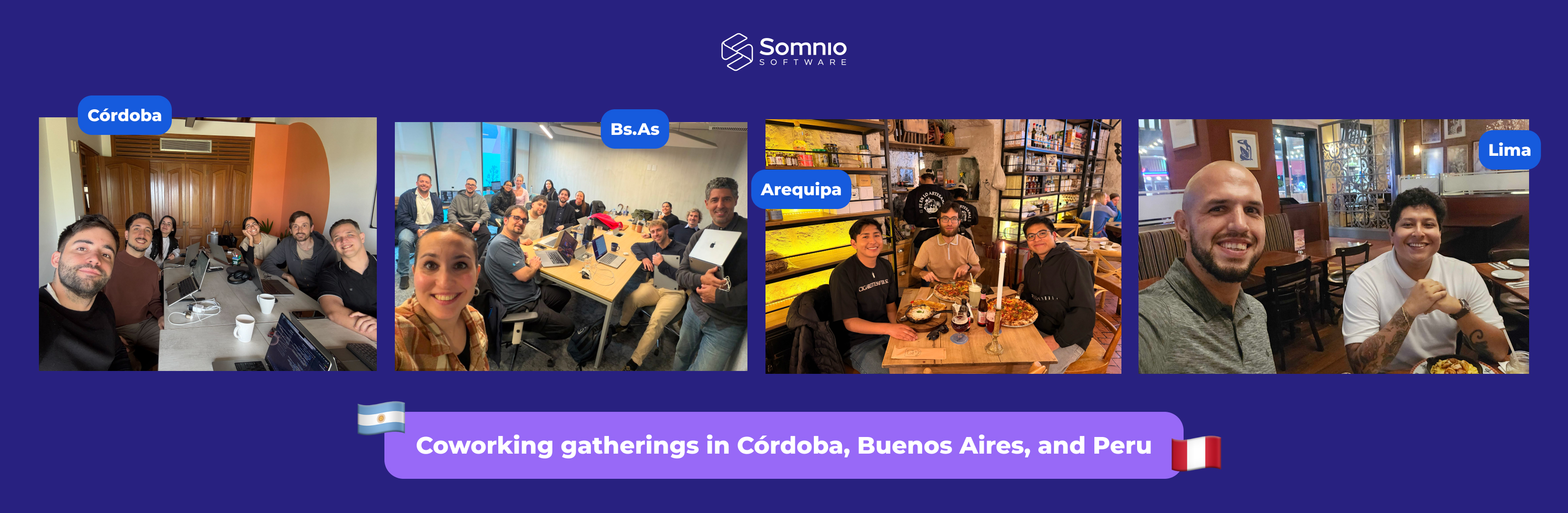
For us, coworking is always optional. The choice belongs to the people involved. The goal is not to make everyone gather in the same place, but to make connection easier when people want it.
Shared moments, from coworking days to the World Cup
Bringing people together in person is a powerful way to build culture. But for a team spread across eight countries, connection also needs to happen beyond a shared physical space.
At Somnio, we create shared experiences that bring people closer across teams, roles, and locations. Some of these moments happen during coworking days, where Somniers who live in the same city meet to work side by side, share ideas, and spend time together beyond the usual screen-to-screen collaboration.
Others happen after work, through after-hours gatherings that give people space to connect in a more relaxed way, outside the rhythm of projects, meetings, and deadlines. And then there is Somnio Week, our well-known end-of-year gathering where Somniers from across the region come together in person to celebrate what we built, reconnect as a team, and create the kind of shared memories that keep our culture alive as we grow.
With the FIFA World Cup 2026 underway, one of those shared initiatives is our company-wide match prediction competition. Every Somnier can pick results, earn points, follow the leaderboard, and enjoy the tournament together, no matter where they are working from.
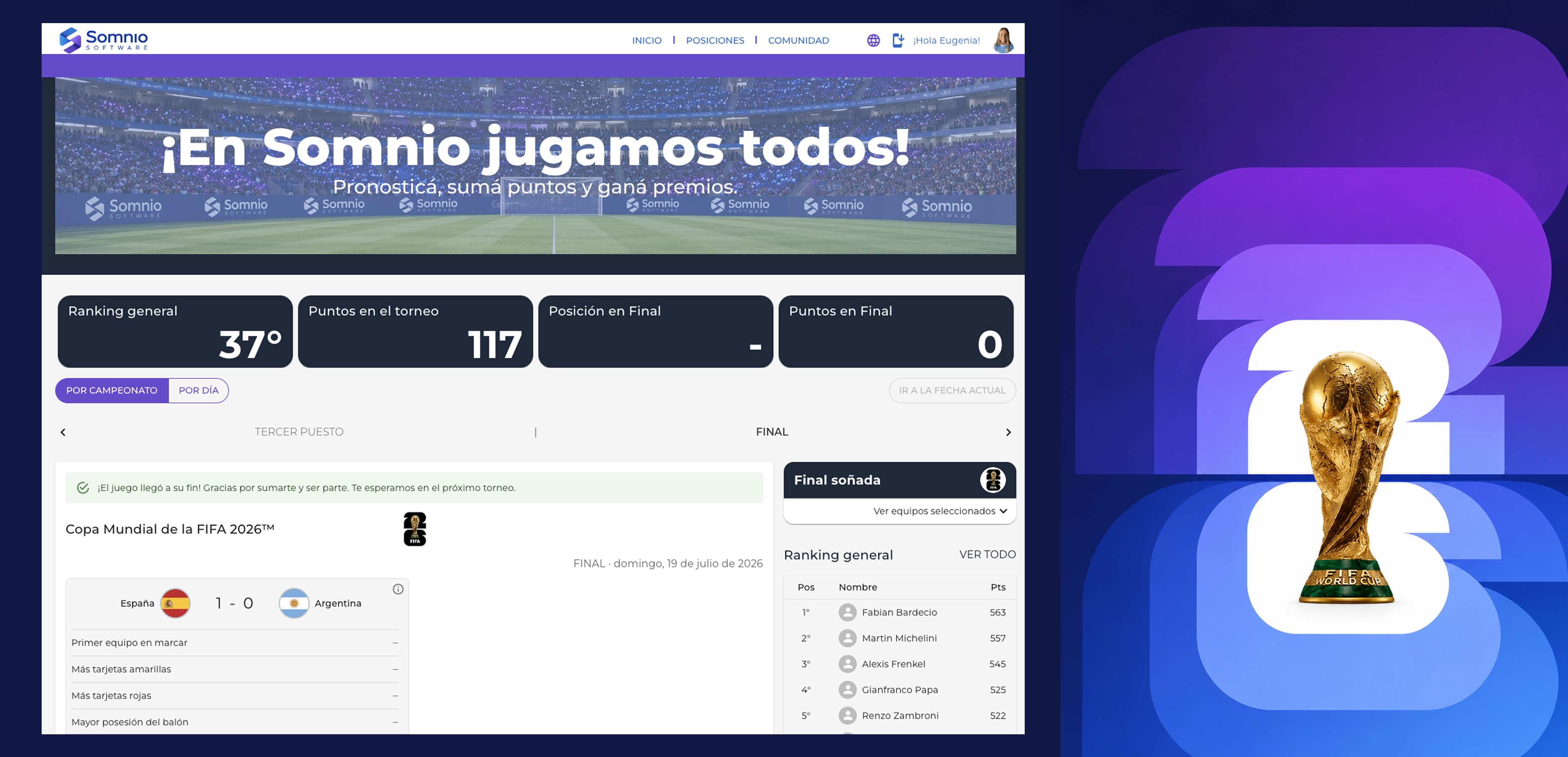
At first, it may look like a simple internal game. And in many ways, it is. But it also says a lot about how remote culture is built. These small shared moments give people something to enjoy together beyond projects, meetings, and deadlines. They open up conversations, create friendly competition, and help the team feel connected even when everyone is not in the same room.
For a remote-first team, initiatives like this are not just nice extras. They are part of how belonging is created over time, through simple experiences that bring people closer and make the culture feel alive in everyday work.
A culture built by the people who live it
This approach also shapes the way people experience Somnio from the inside.
Working in a remote-first team requires autonomy, trust, and comfort with asynchronous collaboration. It means knowing how to take ownership while also staying connected to the team, sharing context clearly, and making collaboration feel natural even across different countries.
But the way we work is not only about processes. It is also about relationships. Great software is not built by isolated talent alone. It is built by people who communicate with clarity, support each other, and care about the quality of how they work together.
Culture at Somnio is not something separate from the products we build. It is part of the invisible architecture behind everything we ship.
Coworking gatherings, after-hours, Somnio Week, and shared initiatives are not just nice extras. They are ways of keeping that architecture alive as the company grows, helping people feel connected, supported, and part of something we are building together.
At Somnio Software, we believe that building great digital products starts with building a team where people feel trusted, supported, and connected. Remote-first gives us flexibility, but it is the way we care for our culture that helps us grow together across countries, roles, and experiences.
If this way of working resonates with you, and you are excited about creating meaningful software with a team that values autonomy, collaboration, and human connection, we would love to get to know you.
Explore our open positions and see if there is a place for you at Somnio.